
Protecting Property When Trees Become Dangerous
Hazardous tree removal in Frederick for trees with structural failure, visible decay, or storm damage threatening buildings and power lines
The Best Friends Landscaping LLC specializes in hazardous tree removal for homeowners facing trees that have split trunks, exposed rot, or severe lean angles that threaten structures. You may notice large dead branches hanging over your roof, fungal growth at the base indicating internal decay, or cracks in the trunk that widen after heavy rain. These signs point to trees that no longer hold their own weight safely and require immediate professional assessment and removal.
Hazardous tree removal addresses trees compromised by disease, age, storm damage, or structural defects that create risk to your home, vehicles, fences, or utility lines. Frederick's mixture of mature hardwoods and older residential lots means many properties contain trees planted decades ago that have outgrown safe conditions or sustained cumulative damage from ice storms and high winds. Removal involves rigging systems, sectional dismantling, and controlled lowering to prevent additional damage during the process.
If you see warning signs or have concerns about a tree on your property, reach out to discuss a site evaluation and removal plan suited to your yard's layout.
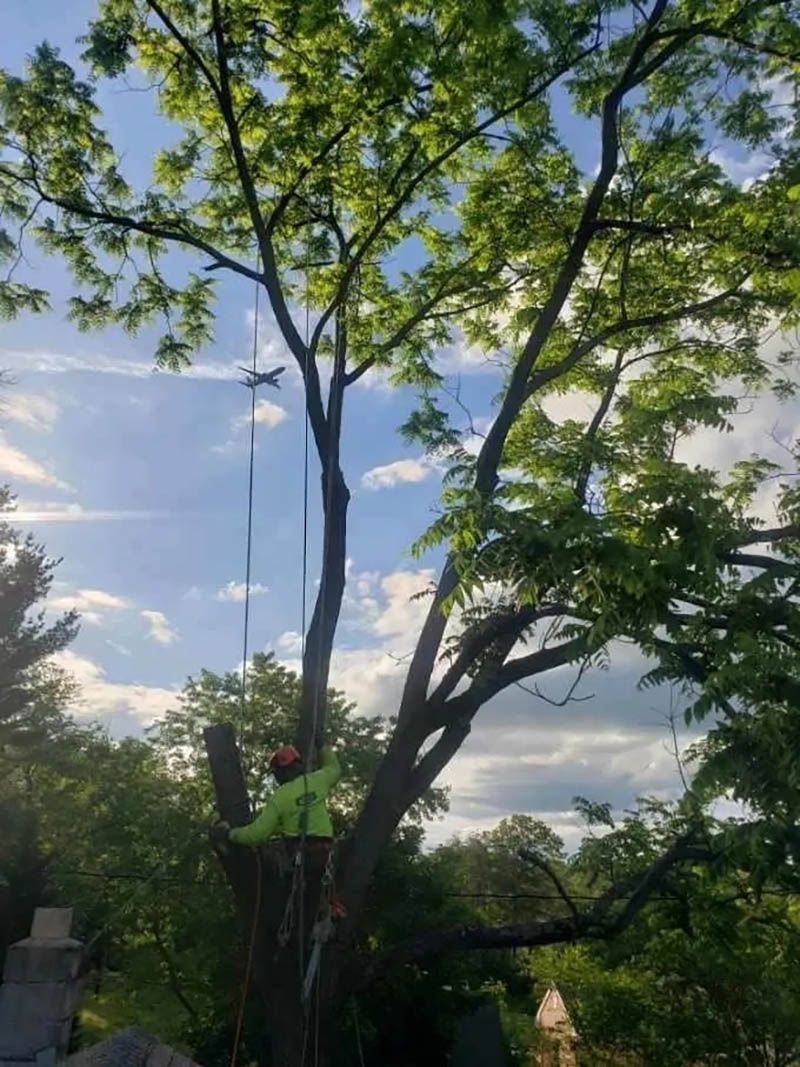
How Hazardous Trees Are Safely Dismantled
You need more than a chainsaw and a truck to remove a hazardous tree without causing secondary damage. The Best Friends Landscaping LLC uses rigging ropes, pulleys, and friction devices to control each section as it is cut, lowering limbs and trunk segments away from structures and landscaping. Cuts are made in a sequence that reduces weight progressively, preventing sudden shifts or uncontrolled drops that could crack driveways or damage nearby plantings.
After the work is finished, you will see the hazardous tree completely removed down to a low stump, with no overhanging debris or widow-makers left in adjacent canopy. The ground around the former tree will be cleared of large wood pieces, and any damaged turf or soil will be raked level where equipment was positioned. If the tree was leaning toward your house, the immediate threat is gone, and you can proceed with stump grinding or replanting once the site is clear.
Removal does not include stump grinding, fence repair, or utility line work, which are separate services. If the tree is entangled with power lines, the utility company must disconnect service before removal begins. Weather conditions, particularly high wind or saturated soil, may delay scheduling to keep the crew and your property safe during the operation.
What to Expect During a Hazardous Removal
Hazardous tree work differs from routine removal because of the unpredictability involved in cutting through compromised wood and managing trees that may already be shifting or cracking under their own weight.
What makes a tree hazardous versus just unhealthy?
A hazardous tree shows structural defects such as splitting crotches, hollow trunks, root uplift, or dead tops that could fail without warning, especially during weather events. Unhealthy trees may decline slowly but still hold their structure.
How is rigging used during removal?
Rigging involves attaching ropes high in the tree and using mechanical advantage to control the direction and speed of falling limbs, preventing them from hitting your home, shed, or fence as they are cut free.
When should a tree be removed instead of pruned?
You should remove a tree when more than half the trunk shows decay, when the lean exceeds fifteen degrees toward a target, or when multiple large limbs have already failed and the crown is no longer balanced.
Why does hazardous removal cost more than standard tree work?
The risk involved requires additional safety equipment, slower cutting techniques, and often more crew members to manage unpredictable movement in unstable wood, especially when working near structures in Frederick's densely built neighborhoods
What happens to the wood after the tree is down?
Wood is typically cut into manageable lengths and removed from your property unless you request that firewood-sized pieces be stacked in a specific area for your use.
The Best Friends Landscaping LLC works throughout Frederick to address hazardous trees before they cause damage, and scheduling is based on the severity of the risk and current weather conditions. If a tree on your property shows signs of failure, contact the team to arrange an on-site assessment and discuss removal timing.